

How to Choose the Right Muslin Backdrop for Your Photography Studio
June 4, 2026
Chromakey Backdrops: Cotton Fabric vs. Synthetic — What Professionals Prefer
June 6, 2026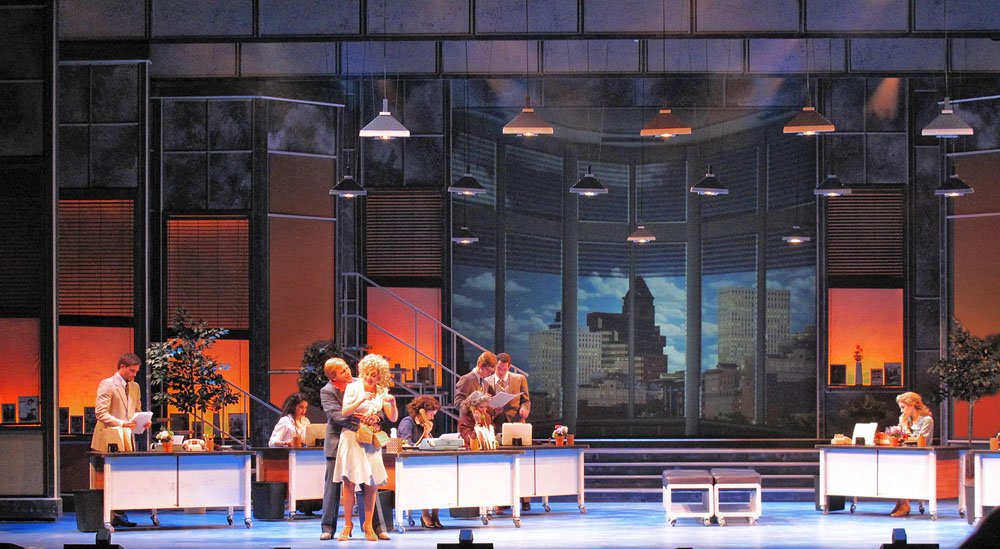
An inside look at how Aavant’s master artisans translate a director’s vision into a large-scale scenic backdrop — from first sketch to opening night.
The magic of theatre lies in its ability to transport an audience. When the house lights fade and the curtain rises, the audience must instantly believe in the world presented on stage. While lighting, sound, and costume play vital roles, the scenic backdrop provides the visceral, foundational topography of that world. At Aavant, we believe that digital printing, while efficient, cannot replicate the texture, soul, and reactive quality of a traditional, hand-painted drop.
Hand-painting at this scale is an alchemical mix: 50% classical fine art and 50% structural engineering. Here is an exclusive, behind-the-scenes look at how our master artisans translate a director’s conceptual vision into a massive, immersive environment.
Phase 1: The Conceptual Spark
The journey always begins with the script and the director’s unique vision. Aavant’s design process is intensely collaborative. We meet with the production’s Scenic Designer to dissect their conceptual sketches, research models, and mood boards. We don’t just ask, “What should it look like?” We ask, “What must it feel like? What is the lighting plot? How must it react when bathed in cobalt blue versus deep amber?”
Our artisans take these initial sketches and begin creating the “cartoon”—a detailed, perspective-engineered master plan.
<grid_image_start>image_1_0.png<grid_image_end> Above: The master plan. A detailed perspective pencil sketch of a Gothic Cathedral interior, alongside an experimental color palette and a coffee mug, laid out on an artisan’s workbench.
Phase 2: The Science of Scale (Cartooning)
This is where art meets pure mathematics. Translating an 8×11-inch drawing onto a 40×20-foot canvas requires a sophisticated grid system and a deep understanding of optical perspective. We must engineer the drawing so that it appears correct to an audience member seated 100 feet away.
The massive, raw muslin canvas (referencing the premium GSM muslin core we use) is stretched tight on our specialized paint frame or flat on our clean studio floor. Our artisans begin the painstaking process of scaling up the cartoon, using charcoal to transfer the grid line by line. Every architectural detail, point of perspective, and subtle curve is mapped with precision before a single drop of paint is mixed.
<grid_image_start>image_1_1.png<grid_image_end> Above: Translating scale. A wide editorial shot of the vast Aavant studio space (referencing the architectural frame of our general theatre collection). A master artisan is seen kneeling on the massive expanse of a raw canvas, using charcoal and a complex grid to meticulously sketch the architectural logic of the Gothic scene.
Phase 3: The Art of Material and Light
Once the charcoal sketch is complete, the painting begins. This is where classical technique is optimized for the stage. We use specialized, matte-finish scenic paints that contain heavy pigment loads but very little binder. This specific paint science ensures the colors remain vibrant but do not reflect the intense stage lighting (preventing unwanted glares).
Our painting methodology is layered:
- The Inking/Priming: The entire charcoal drawing is often “inked in” with a translucent wash of dye or thin paint to lock down the lines.
- Base Coat & Texture: We build the topography. To paint aged stone, we don’t paint grey; we apply multiple wet-on-wet layers, utilizing techniques like stippling, scumbling, and glazing. These layers provide the rich texture that is essential for theatrical immersion (referencing the tonal depth established in our Painted Backdrop methodology).
<grid_image_start>image_1_2.png<grid_image_end> Above: Close-up on material depth. A scenic brush applies rich, deeply pigmented cobalt blue scenic paint, demonstrating how the specialized matte pigment hits the specific weave of the cotton muslin fabric, building tonal layer upon layer.
Phase 4: Collaboration in Motion
A large drop is rarely painted by one person. It is a harmonious dance of multiple skilled hands. Our master artisans work simultaneously on the massive vertical frame. They must maintain consistent brushwork, understand how their section blends with the work five feet above them, and constantly step back to judge the perspective from an “audience distance.” The entire studio hums with collaborative energy as different artists tackle architecture, sky, and shadow detail simultaneously.
<grid_image_start>image_1_4.png<grid_image_end> Above: Collaborative artistry. Multiple Aavant master artisans, working in harmony, use long-handled brushes simultaneously on the vertical frame. The Gothic scene is now partially colored, showing how perspective and lighting logic are maintained across the massive surface area through teamwork.
Phase 5: The Opening Night Transformation
The final phase occurs when the finished backdrop leaves our studio and is hung on the professional stage (often utilizing our precise Portal, Leg, & Header framing systems). Here, under the command of the Lighting Designer, the drop truly comes alive. The matte texture and complex layering of paint absorb and reflect light in unexpected, beautiful ways. Shadows seem to hold actual depth; a hand-painted stone wall seems real enough to touch.
The moment the curtain rises and the drop completes the performance is the ultimate payoff.